
Review of The Dictionary of Lost Words by Pip Williams
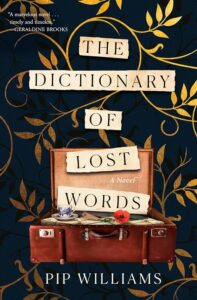 The Dictionary of Lost Words by Pip Williams (Ballantine Books, 2021) isn’t quite like most of the books I read and review here. But the title caught my eye, as did the description of the book. While this book isn’t explicitly speculative, there are certainly some elements that seem as though they’re not exactly mundane, either. Add in the historical setting and the topic, and I was sold!
The novel follows Esme, the daughter of a lexicographer who is working on the Oxford English Dictionary. As her mother died when Esme was young, she spends much of her childhood in and around the Scriptorium where her father works, learning about words and also collecting some strays of her own. As she gets older, she becomes part of the team working on the dictionary while also grappling with which words are fit for the dictionary and which are not.
When an author tackles historical fiction, there’s always a balancing act between portraying history accurately and putting one’s own spin on it, and Williams excels at this. The historical actors and events are present, though most of them are largely in the background, with Esme (who is fictional) at the forefront. She and those with whom she interacts are all thoroughly interwoven with the historical setting, so that the reader could believe that this is history rather than fiction.
If you enjoy historical fiction, particularly at the intersection of language, gender, and just a tinge of the speculative, check out The Dictionary of Lost Words!
(The book does not include content notes, but I would suggest: loss of parents, childhood injury, unwanted pregnancy, violence against women, and pervasive, though historically accurate, sexism.)
Like my book reviews? Subscribe to my monthly newsletter to get a recap of what I’ve read and reviewed each month!

Comments